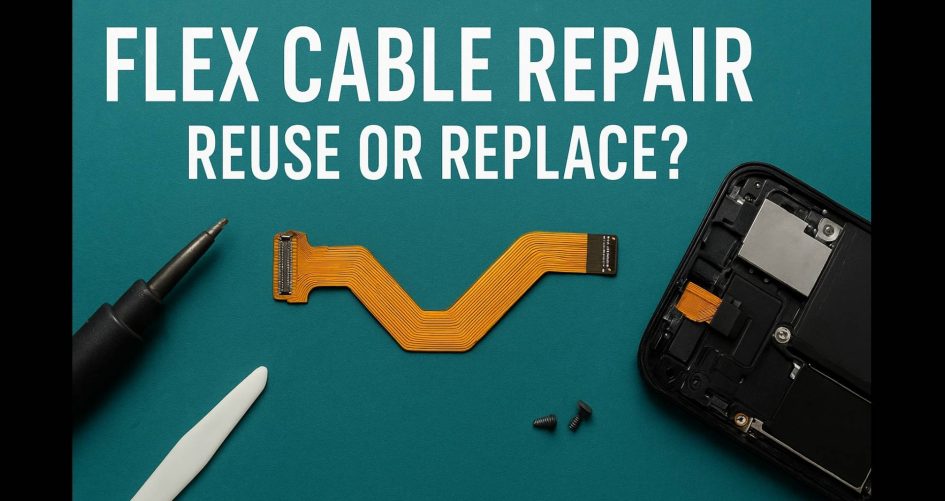
In the fast-paced world of smartphone refurbishment, few repair choices spark more debate than deciding whether to go for Flex Cable Repair or opt for a full replacement. This critical step impacts not only the cost of repair but also the long-term reliability of the device. When a phone circuit line is damaged, technicians must make a smart mobile repair decision — one that balances part availability, customer budget, and device safety. In this article, we’ll unpack the pros, cons, and industry best practices for making the right call every time. Know more.
1. Understanding the Role of Flex Cables in Smartphones
A flex cable fix is often needed because these components are the lifelines of a device’s internal connectivity. Flex cables — sometimes called ribbon cables — carry electrical signals between different parts of the phone. Whether it’s the charging port, display, fingerprint reader, or volume buttons, these thin phone circuit line connectors ensure smooth communication between hardware modules.
Because of their delicate structure, flex cables are prone to wear, bending damage, or corrosion. For refurbishing professionals, a mobile repair decision on these parts requires both technical skill and economic foresight.
2. Common Causes of Flex Cable Damage
Before jumping into a flex cable fix, it’s crucial to understand what leads to failure in the first place:
- Repeated folding stress from device use (especially in foldable models).
- Moisture exposure causing corrosion.
- Connector wear from frequent assembly/disassembly.
- Heat damage from other failing components.
- Accidental tears during unrelated repairs.
Knowing the cause helps in deciding whether a repair is temporary or if replacement is the smarter mobile repair decision.
3. Signs That a Flex Cable Needs Attention
Some symptoms of phone circuit line issues include:
- Touchscreen unresponsiveness in certain zones.
- Buttons or fingerprint sensor not functioning.
- Intermittent charging or data transfer.
- Camera failure despite working modules.
These signs tell technicians it’s time to evaluate whether a flex cable fix will be enough or if a full swap is warranted.
4. Reuse vs Replace: The Core Decision Factors
When making a mobile repair decision for a flex cable, consider:
- Part Cost & Availability – Is the exact cable easy to source? Is it available in bulk for refurb lines?
- Labor Intensity – Does repairing it require microscopic soldering or extended teardown time?
- Reliability – Will a patched phone circuit line last as long as a new one?
- Customer Expectation – Is the repair under warranty? Will clients accept a repaired cable instead of new?
5. The Case for Repairing (Flex Cable Fix)
Pros
- Cost Savings – Often cheaper than buying new parts, especially for rare models.
- Faster Turnaround – In cases where replacements take days to arrive.
- Sustainability – Reduces e-waste by extending the life of components.
Cons
- Shorter Lifespan – Soldered patches on a phone circuit line can fail with repeated bending.
- Higher Skill Requirement – Requires micro-soldering expertise and precise tools.
- Warranty Risk – More likely to cause repeat failures if not perfectly executed.
For skilled refurbishing teams, a flex cable fix is viable when the damage is minor and the cable’s function can be fully restored without compromising safety.
6. The Case for Replacing
Pros
- Long-Term Reliability – New parts mean fewer comebacks and better customer confidence.
- OEM Quality Control – Ensures performance matches original specifications.
- Less Technician Time – Avoids complex micro-repairs on fragile lines.
Cons
- Higher Costs – Particularly for flagship or newly released models.
- Supply Chain Delays – Waiting for parts can delay shipping deadlines.
For most bulk refurbishment operations, replacing a faulty phone circuit line is the preferred mobile repair decision if the goal is to maintain premium quality standards.
7. Tools & Techniques for Successful Flex Cable Fixes
If repair is the route you take, here’s what a professional setup should include:
- Hot air rework station for precise heating.
- Microscope for detailed solder point visibility.
- Fine-tip soldering iron for pinpoint repairs.
- UV-curing resin for reinforcing fragile sections.
Mastering these tools can make a flex cable fix just as reliable as a new part — at least for certain repair categories.
8. Testing After Repair or Replacement
Regardless of whether you choose a flex cable fix or replacement, full testing is essential:
- Check continuity across the phone circuit line with a multimeter.
- Run diagnostic software to ensure all connected components function correctly.
- Perform a stress test — bending the device (within safe limits) to confirm stability.
Documenting test results helps track repair quality and supports your mobile repair decision if a warranty claim arises.
9. Cost-Benefit Analysis for Refurbishing Businesses
In high-volume refurbishment, your decision to repair or replace must be based on numbers, not just instinct:
- Part Cost vs Labor Cost – Sometimes a $3 cable replacement beats spending 30 minutes on a micro-fix.
- Failure Rate Tracking – If repaired phone circuit line failures exceed 10%, replacements may be more profitable long-term.
- Customer Demographics – Budget markets may prefer a cheaper repaired part, while premium clients expect replacements.
Running these calculations ensures your mobile repair decision aligns with both quality control and profitability.
10. Environmental Impact of the Choice
With sustainability becoming a selling point in the refurb industry, the repair vs replace choice has a green angle too:
- Repairing (Flex Cable Fix) – Cuts down on e-waste and aligns with eco-friendly branding.
- Replacing – Generates waste but may reduce the number of failed devices re-entering the market.
Some refurbishers use hybrid policies — repairing when feasible, replacing when damage is severe — balancing both phone circuit line integrity and environmental responsibility.
11. Industry Trends and Future Outlook
As smartphones get thinner and more complex, flex cables are becoming even more intricate — sometimes combining multiple functions in one strip. This makes the mobile repair decision harder: repairing one part of a multi-layered phone circuit line is challenging, and often, replacing becomes the only viable option.
On the flip side, micro-repair technology is improving. With better tools and more skilled technicians entering the refurb market, high-quality flex cable fix jobs may become just as trusted as replacements.
Final Takeaway
Whether you choose a flex cable fix or a full replacement, the key is making a smart, informed mobile repair decision. Evaluate the damage, consider your cost-to-benefit ratio, and always put the device’s reliability first. Remember — the phone circuit line is the backbone of the device’s functionality, and a weak link can compromise the entire repair.
In refurbishment, your decision isn’t just about one phone — it’s about your brand’s reputation for quality and consistency. Make it wisely, and your clients will keep coming back. Know more.