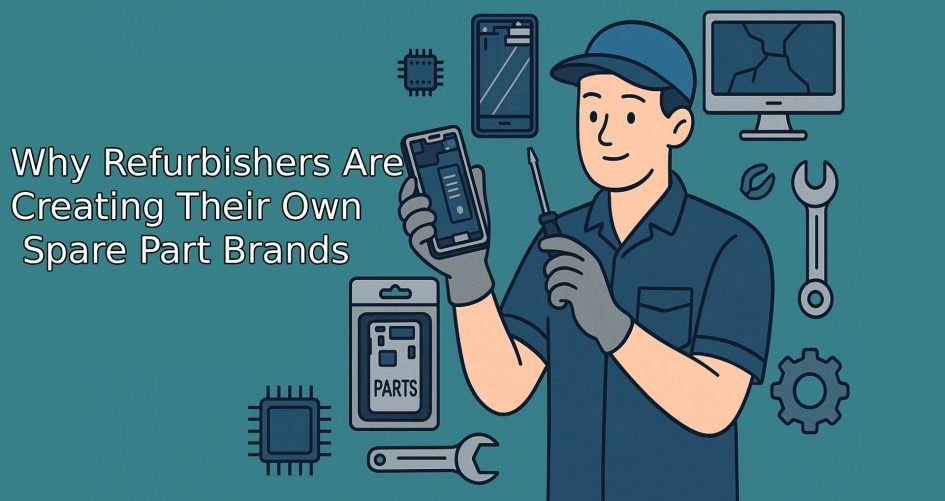
In today’s competitive refurbished smartphone industry, more businesses are turning to private label spare parts, investing in branded phone components, and even exploring full-scale OEM building to stand out in the market. This shift isn’t just a passing trend — it’s a strategic move to improve quality control, boost brand recognition, and create higher profit margins. For refurbishers, building Spare Part Brands can transform them from simple resellers into trusted industry authorities. Know more.
1. The Rise of Private Label Spare Parts in the Refurbished Industry
Private label spare parts refer to components manufactured by a third party but sold under your own brand name. Unlike generic parts, these products carry your branding, packaging, and quality assurance.
For refurbishers, this approach offers several advantages:
- Stronger brand recognition
- Ability to set higher retail prices
- Full control over packaging and marketing
- Consistency in supply and quality
When paired with branded phone components, it gives your business a professional edge that wholesale buyers and retail customers instantly notice.
2. Why Branded Phone Components Are Winning Customer Trust
Customers buying refurbished phones often worry about part quality. By selling branded phone components under your own label, you send a clear message: we stand behind our products.
Key benefits include:
- Transparency – Buyers know exactly where the part came from.
- Trust – Consistent branding signals consistent quality.
- Loyalty – Customers return to brands they trust for future purchases.
When combined with OEM building, you can take things a step further by designing parts that match or exceed original specifications.
3. OEM Building as the Next Step for Refurbishers
OEM building (Original Equipment Manufacturer production) means working directly with a factory to design, produce, and sometimes improve upon parts originally created by big brands.
For refurbishers, OEM partnerships allow:
- Custom manufacturing to your specs
- Improved durability or performance over generic parts
- Exclusive product designs unavailable to competitors
Pairing OEM building with your own private label spare parts strategy can create a unique selling point in a crowded market.
4. Controlling Quality from the Ground Up
When refurbishers depend solely on generic suppliers, they risk receiving inconsistent quality. By investing in private label spare parts, you can:
- Define strict quality standards
- Implement your own QC processes
- Reject subpar batches before they reach customers
This is especially valuable for branded phone components, as poor quality can damage your brand reputation. Through OEM building, you gain control over materials, manufacturing methods, and even packaging.
5. Building a Premium Brand Image
A well-executed private label spare parts line helps position your business as a premium supplier rather than a low-cost reseller. High-quality branded phone components in professional packaging create a perception of reliability and expertise.
This not only helps in B2C markets but also boosts your credibility with wholesale buyers who prefer to stock consistent, reliable brands. OEM building further strengthens this by ensuring your parts meet exacting specifications every time.
6. Increasing Profit Margins
Generic parts often come with razor-thin margins because anyone can sell them. With private label spare parts, you create a proprietary product that can’t be directly compared to every other seller’s offering.
Advantages include:
- Higher markups on branded phone components
- Reduced price wars with competitors
- Stronger repeat business due to brand loyalty
OEM building also allows cost efficiency at scale, meaning your profits grow as your production volume increases.
7. Differentiating from the Competition
In the crowded refurbished market, differentiation is key. Offering private label spare parts sets you apart, because:
- Competitors can’t copy your branding exactly
- You can tailor your branded phone components to meet customer feedback
- Exclusive designs through OEM building can’t be sourced elsewhere
This uniqueness becomes a selling point in both online and offline marketplaces.
8. Marketing Advantages of Having Your Own Brand
With private label spare parts, every sale is an opportunity to promote your brand. Custom packaging can include your logo, website, QR codes, and warranty details.
Branded phone components are easier to advertise because they carry a sense of professionalism and legitimacy. Meanwhile, OEM building gives you the authority to claim “manufactured to our specifications,” which is a strong trust signal in marketing campaigns.
9. Long-Term Supply Chain Stability
Relying on random suppliers for generic parts can lead to sudden shortages or quality drops. By working with OEM building partners and creating private label spare parts, you establish a stable supply chain that:
- Ensures consistent stock availability
- Allows accurate demand forecasting
- Reduces dependency on volatile market pricing
When your branded phone components are made specifically for you, you don’t have to worry about competing for supply with every other refurbisher.
10. Meeting Growing Global Demand
The refurbished phone industry is expanding globally, and with it, the need for quality parts. Private label spare parts enable refurbishers to scale confidently, knowing they can deliver consistent products worldwide.
Branded phone components make it easier to win over international buyers who are cautious about quality. With OEM building, you can adjust specifications to meet different regional regulations or consumer preferences.
11. Steps to Launch Your Own Spare Part Brand
Launching private label spare parts requires planning:
- Identify high-demand parts – screens, batteries, flex cables, etc.
- Find reliable OEM building partners – factories that can meet your quality and branding needs.
- Develop your branding – logo, packaging design, product naming.
- Test product batches – ensure quality before going to market.
- Market aggressively – highlight the advantages of your branded phone components.
12. Overcoming Challenges
While private label spare parts offer huge benefits, challenges include:
- Initial investment in design and branding
- Longer lead times with OEM building compared to off-the-shelf parts
- Need for strong QC processes to maintain reputation
However, these challenges are outweighed by the long-term benefits of branded phone components that earn customer trust.
13. Case Study: A Refurbisher’s Success Story
One mid-sized refurbisher switched from generic parts to private label spare parts for their battery line. They worked with a factory on OEM building, ensuring their branded phone components had 15% more capacity than average market batteries.
Within 12 months, their brand became a top seller in their region, commanding higher prices and winning multiple wholesale contracts.
14. The Future of Spare Part Branding in Refurbishment
As consumer awareness grows, generic parts will lose appeal. Refurbishers that invest in private label spare parts, high-quality branded phone components, and strategic OEM building will dominate the market by combining product reliability with brand loyalty.
Conclusion
Creating your own spare part brand is more than just a marketing move — it’s a long-term business strategy. By embracing private label spare parts, investing in branded phone components, and exploring OEM building, refurbishers can control quality, increase profits, and stand out in a competitive market.
In an industry where trust is everything, branding your parts can turn one-time buyers into lifelong customers. The refurbishers who recognize this opportunity now will be the market leaders of tomorrow. Know more.